Language: Visit yukonjapan.com | Français | Deutsch
Canoeing on scenic Kluane Lake

About Yukon:

  • At 483,610 km2 in area, the Yukon is larger than California and covers more area than Belgium, Denmark, Germany and the Netherlands combined.
  • Yukon's neighbours are Alaska, British Columbia and the Northwest Territories, and the territory has 430 kilometres of shoreline along the Beaufort Sea.
  • With just 32,000 residents, the Yukon's very large landscape has a very small population. In fact, the population was higher in 1898 than it is now. Dawson City alone reached a population of over 30,000 during the Klondike Gold Rush.
  • Yukon's heritage is rich and culturally diverse. About one-fifth of all Yukoners are of aboriginal ancestry and belong to one of fourteen Yukon First Nations. Whitehorse has a vibrant francophone community, and people from Europe, Asia and around the world have chosen to make their homes here.
  • The Yukon lies in the Pacific Standard time zone (same as Vancouver and Los Angeles).
  • Our official bird (raven) and flower (fireweed) aren't just symbolic—they're everywhere! You'll see ravens throughout the Yukon any time of the year, and it's the subject of many First Nations stories. In summer our forests, riverbeds and roadsides are ablaze with magenta fireweed.
  • Whitehorse receives lots of sunshine and less precipitation than most Canadian cities.
  • Our dry, continental climate results in a wide variety of weather year-round. Humidity is very low, so summers can be hot and dry while our winter coldness is less harsh than in damper climates.

The Yukon is closer than you think.

Whitehorse has regular jet service from Vancouver (2 hr 15 min) and Edmonton and Calgary (2 hr 30 min). Year-round scheduled service is also available from Northwest Territories, and in summer we have direct flights from Germany and Alaska.

Whitehorse is more urban than you realize.

Whitehorse is pleasantly urban and decidedly wild—at the same time. As the Yukon capital and a major northern hub, it enjoys facilities, services and businesses far beyond the expectation of a city of 25,000. It's a big little city surrounded by wilderness with the amenities of a much larger destination paired with the friendly demeanour of a close-knit community.

Yukon towns have the window on wilderness.

Our communities have spectacular wilderness just out the back door. Haines Junction, Burwash Landing and Destruction Bay sit at the edge of Kluane National Park in the shadow of the Kluane Front Ranges. Mayo and Keno are the jumping off point to the spectacular rivers of the Peel watershed. Dawson City is the gateway to Tombstone Park and the scenic Dempster Highway, and Old Crow shares North Yukon with four national and territorial parks.

Wildlife is at home in the Yukon.

Here in the Yukon, people are far outnumbered by animals, and we like it that way. Yukon is home to 150,000 caribou, 70,000 moose, 22,000 mountain sheep, 7,000 grizzly bears and 254 species of birds.

Yukon is a land of superlatives.

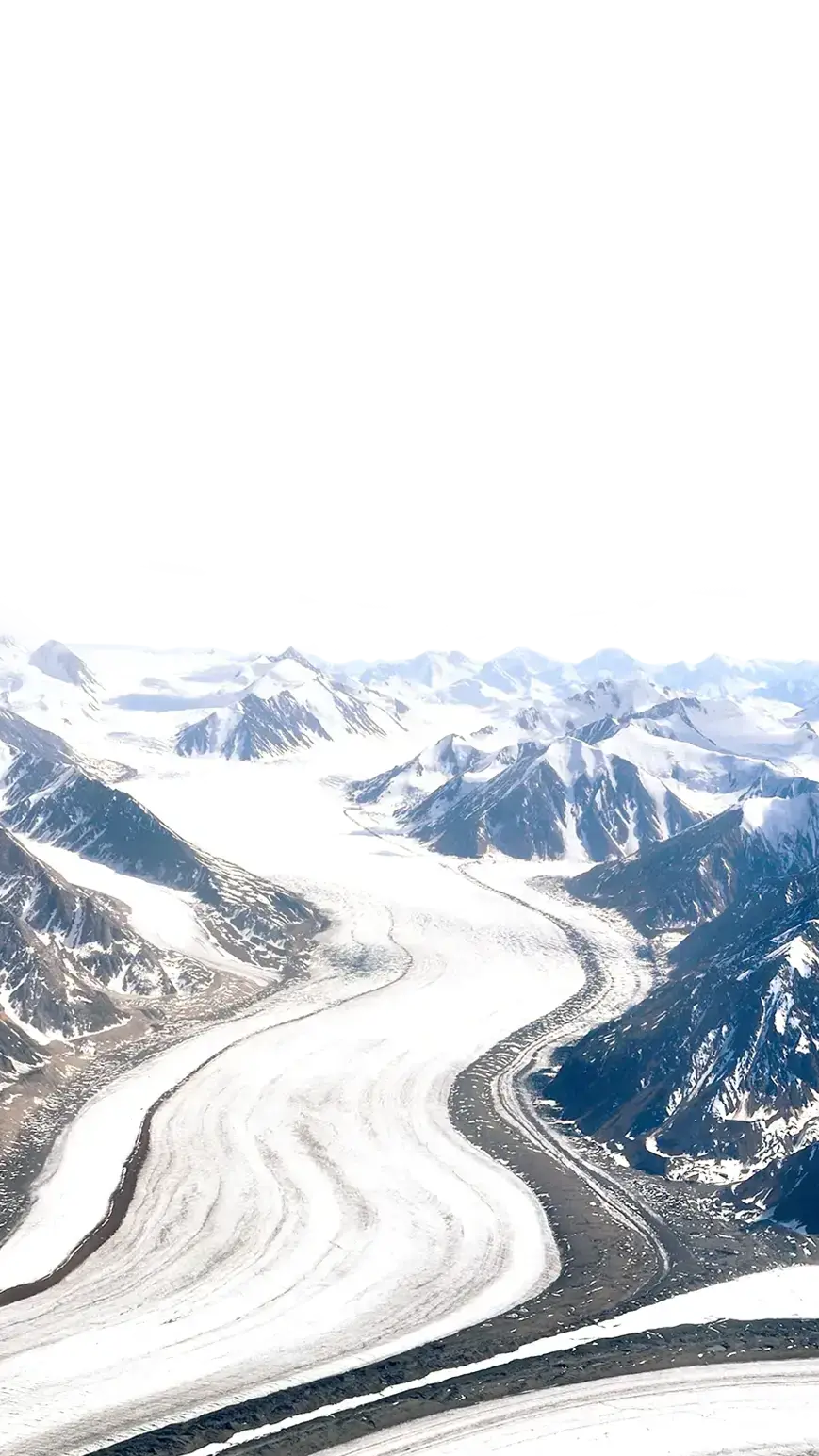
Yukon is high: At least twenty mountains in the St. Elias Range in southwest Yukon exceed 4,000 metres, and more than a handful exceed 5,000 metres. Towering over them all and surrounded by vast icefields is Mount Logan, Canada's highest peak at 5,959 m.

Yukon is wild: It's one of North America's major wilderness attractions: close to 80 per cent remains pristine wilderness. The Yukon has three national parks, six territorial parks and four Canadian Heritage Rivers. Along with three neighbouring parks in Alaska and B.C., Kluane National Park forms the world's largest protected area and a UNESCO World Heritage Site.

Yukon is wet: Extensive lake and river systems crisscross the Yukon. The territory is a significant reservoir of fresh water, and almost two-thirds of the territory is drained by the mighty Yukon River, Canada's second longest river. Yukon has over 70 canoeable mountain rivers.

Yukon is extreme: This is the home of the Yukon Quest, the toughest sled dog race in the world, and its sister event, the Yukon River Quest, the longest annual canoe and kayak race in the world. A tiny place called Snag in southwest Yukon holds the record-low temperature for North America, and central Yukon heats up so much in summer that gardens yield record-size squashes.

Yukon is ancient: Known as prehistoric Beringia, much of what is now the Yukon escaped glaciation during the last Ice Age. Beasts like woolly mammoths and scimitar cats once roamed here, and North America's earliest inhabitants migrated across a land bridge from Siberia. Gold-bearing riverbeds were never scoured and spread by glaciers, leaving rich gold deposits that drew thousands of prospectors to the Klondike.

Page Execution time is 0.078 second(s) | User Country Code: CA
| Travel Media | Travel Trade | Disclaimer | Privacy Statement | © 2008, Tourism Yukon